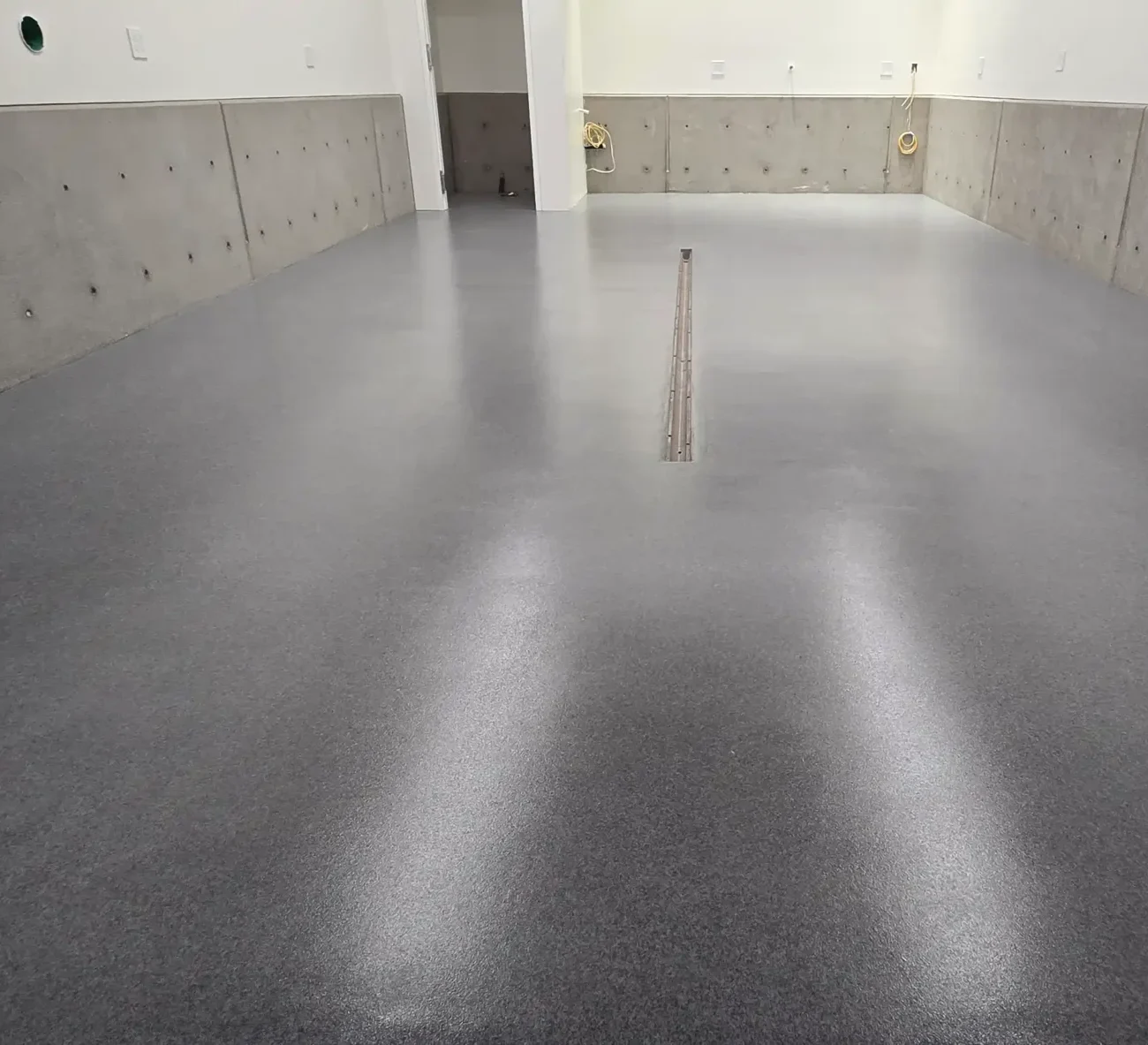
#1 Grind
Every floor coating installation begins with meticulous surface preparation using professional-grade, walk-behind diamond grinding equipment. This critical step removes existing coatings, contaminants, and surface blemishes while correcting minor imperfections to create a clean, level substrate. Mechanical grinding ensures the concrete meets the industry-recommended Concrete Surface Profile (CSP) required for the specific coating system being installed, which is essential for long-term performance.
Beyond achieving the proper CSP, the grinding process opens the concrete’s pores, allowing the primer to deeply penetrate the surface and form a strong mechanical and chemical bond. This level of adhesion significantly enhances durability and wear resistance. When properly prepared and installed, our coating systems bond securely to the concrete, resisting peeling, delamination, and premature failure.
The result is a high-performance floor designed to withstand daily use while maintaining its appearance and integrity for years to come.
#2 Patch/Repair
Before any coating is applied, we thoroughly repair and refine the concrete surface to ensure a flawless foundation. All visible imperfections in the slab—including spalls, cracks, chips, pits, and broken or damaged edges—are carefully patched using professional-grade repair materials designed for strength and longevity. Once repaired, each area is mechanically ground to blend seamlessly with the surrounding concrete.
This detailed preparation process restores structural integrity while creating a smooth, uniform surface across the entire floor.
Proper patching and grinding not only improve the appearance of the slab but also eliminate weak points that could compromise coating performance over time. By addressing every imperfection before installation, we ensure the coating system bonds evenly and performs as intended. The result is a clean, level, and durable concrete surface that is fully prepared for our coating process and built to deliver long-lasting results.
#3 Concrete Joints
This is one of the most common questions we receive: What happens to the joints in my concrete floor? Concrete is a dynamic material that naturally expands and contracts in response to temperature and humidity changes. The joints present in your slab—commonly referred to as control or expansion joints—are intentionally placed to accommodate this movement and to manage where cracking occurs as the concrete cures and ages.
No coating or material can prevent concrete from shifting over time. These joints play a critical role in preserving the integrity of the slab. For clients seeking a seamless appearance, a high-quality, flexible joint filler can be installed to allow for movement while minimizing visual interruption. However, in most cases, we recommend leaving joints open whenever possible.
This approach helps prevent future cracking, coating stress, or joint failure, ensuring long-term performance and durability of the finished floor.